
- Scholarly Source
Ruderman, EllenG. “Nurturance and Self-Sabotage: Psychoanalytic Perspectives on Women’s Fear of Success.” International Forum of Psychoanalysis, vol. 15, no. 2, June 2006, pp. 85–95. EBSCOhost, doi:10.1080/08037060600621779.
The article follows two women, Dana and Carlotta, who both experience familial struggles which, in turn, contribute to their self-sabotaging attitudes. The article discusses a term I never heard before called ‘masochism’ which is used to describe the definition of a woman. The article explains a woman is derived from her early childhood relationships and societal values which label certain characteristics such as aggression or ambition as being unfeminine and shameful (86-87). This term further encourages women to self-sabotage. Women fear that if they are successful in life, it could be viewed as a threat to their personal relationships. Women in society struggle to self-identify due to past complicated family interactions. I never would have thought that the way society and family place pressure onto females could be a factor as to why they self-sabotage. This article is useful for my feature story because the term masochism as well as familial relationships provide insight on why women may self-sabotage. (Ruderman 2006)
2. Scholarly Source
Schnyer, David M., et al. “Decision-Making Under Conditions of Sleep Deprivation: Cognitive and Neural Consequences.” Military Psychology (Taylor & Francis Ltd), vol. 21, Jan. 2009, pp. 36–45. EBSCOhost, doi:10.1080/08995600802554607.
This article presents a case study which assesses how sleep deprivation affects decision making. I know many teenagers are not getting enough sleep, which can explain why they struggle to make proper decisions. The participants of the study were given decision making tasks to do while undergoing an fMRI after a good night’s sleep and then had to perform the same tasks the next day after 24 hours without sleep. The study concludes that sleep deprivation has an effect on our decision-making processes. While this article did not necessarily change my view on the topic, it definitely expanded my knowledge on how sleep strongly affects individuals’ abilities to make clear decisions, which is very useful for my feature story. This lack of sleep can be a factor as to why many individuals self-sabotage, since their brains are not fully functional to make clear headed decisions. (Schnyer et al. 2009)
3. Non-Scholarly Source
Hendriksen, Ellen. “Why Do We Self-Sabotage?” Psychology Today, Sussex Publishers, 10 Oct. 2017.
This article explains six reasons why individuals self-sabotage. These reasons are: lack of self-worth, desire to gain control, a sense of deception, an easy blame for problems, familiarity and boredom. The article also explains that the most common ways to self-sabotage are by procrastinating, stressing out or being under the influence of drugs and/or alcohol. By understanding how and why these individuals engage in this behavior, it can be easier to assess how the behavior can be solved. Since this article discusses the reasons behind self-sabotage, it did not make me think of my topic in a new way but I learned a lot of unexpected reasons explaining why people self-sabotage which will be very useful in my feature story. I learned that, ultimately, self-sabotaging behavior is caused by many factors and there is not just one main reason to explain the issue. (Hendriksen 2017)
4. Non-Scholarly Source
Friedman, Lauren F. “This Is Why You Stay Awake All Night When You Know You Need To Sleep.” Business Insider,18 June 2014.
This article discusses why some people stay up late when they know they should be sleeping, which is an act of self-sabotage that many individuals do. I learned a lot from this article. The article presents the idea of a concept I never knew existed called “sleepless sufferers” which are individuals who have difficulty getting into bed. The article also presents the idea of “bedtime procrastinators” which are people who are tired and know they should be in bed but are pre-occupied with other things (such as watching TV, washing the dishes…). Nothing is really preventing these bedtime procrastinators to go to sleep since they are choosing to do other things rather than sleeping. The article poses an important question being “why is it that people fail to do what they know is good for them to do?”. The article brings up an interesting point which is that often individuals procrastinate undesirable tasks (such as doing homework), but sleep is usually desirable because it makes us feel good. Therefore, why do we put it off? While the article does not really expand on the answer to the question, I think it’s a super interesting point that makes me see my topic in a new way and I want to look more into the answer to that question. This article made me question a lot about why individuals stay up late when they should be sleeping and it almost made me more confused, which, in my opinion, is good because it means there’s more for me to discover about this issue. (Friedman 2014).
5. Cultural or Artistic Artifact
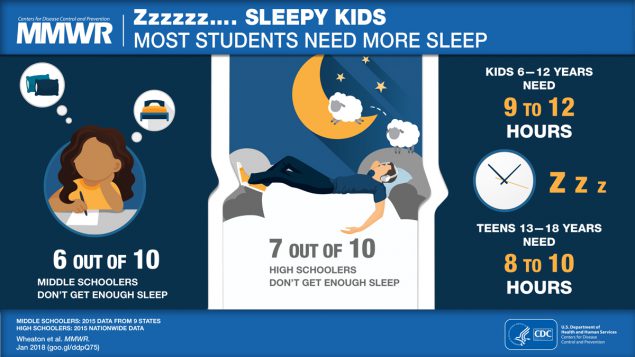
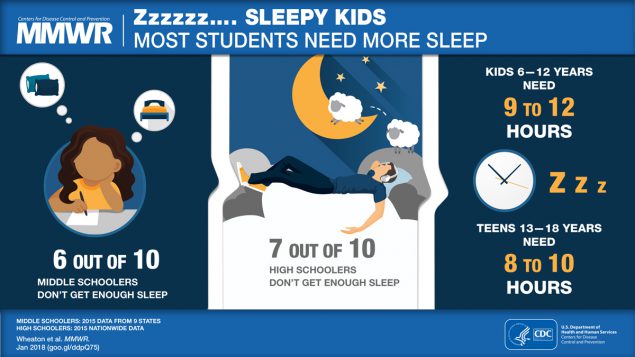
This diagram demonstrates some facts regarding sleep among teenagers. The facts are quite astonishing as it shows that, for example, 70% of teenagers are not getting enough sleep. I knew many teenagers did not get enough sleep, but I did not realize it was so many individuals. Therefore, 70% of teens are getting less than 8 hours of sleep, which is shocking. I learned that sleep deprivation is a serious problem among teens and can therefore explain why so many teenagers engage in self-sabotage. I now understand that lack of sleep is a much bigger issue than I initially thought it was, making it important to mention in my feature story.
6. Example of Experiential Research
For the past 4 days, I recorded how many hours of sleep I got, how I felt on those days and some of the tasks I completed on those days. Here’s the notes I took:
Friday:
- Got 6 hours of sleep
- Feeling super tired all day
- Couldn’t pay attention in class, felt nauseous
- Bought 2 coffees to try to stay awake
- VERY irritable
- Took a 3 hour nap when I got home from school
Saturday
- Got 9 hours of sleep
- Went to a workout class and feeling rejuvenated
- Studied productively most of the day
Sunday
- Got 9 hours of sleep
- Felt really positive, good spirited
- Studied some more today and completed some homework
Monday
- Got 6.5 hours of sleep
- Feeling a little groggy, but not too bad
- Was in a very bad mood near the end of the day
- Drank 2 coffees to keep me awake
- Wanted to go out for dinner with my mother but felt lazy so we decided to order in dinner
- Spent 2 hours on TikTok and Netflix until 1am when I should’ve been sleeping
These notes are really interesting to me as they demonstrate that on days in which I got more sleep, I was more clear headed, productive, and tended to make better decisions that would benefit my future self. Even though I know staying up late is bad for me, I do it anyways and it’s interesting to see the effects that it has on my mood, behaviour and thoughts.
 Rachel's Nonfiction Blog